
Storm Damage Roof Repair in Mobile & Baldwin County, Alabama
Looking for storm damage roof repair in South Alabama? Hurricane, tornado, severe thunderstorm — when the storm passes and you see the damage, the clock starts. Every hour of exposure means more interior damage. We dispatch same-day for active leaks across our 9 Gulf Coast locations.
- Same-Day Emergency Dispatch
- Emergency Tarping 24–48 Hours
- Licensed & Insured Gulf Coast Roofers
- Insurance Claim Documentation Support
What's Going On With Your Roof?
Free inspections • Same-day response • No obligation
No obligation · Licensed & insured · Same-day response
We Don't Chase Storms. We Build Roofs That Survive Them.
After every major Gulf Coast storm, out-of-state contractors flood the area. They knock on doors within hours of the storm passing, claim to be "in your area doing jobs for neighbors," and pressure you into signing contracts before you've had time to assess your situation. They collect deposits, do substandard work, and are unreachable when warranty problems surface six months later. After Hurricane Sally in 2020, the Alabama Attorney General's consumer protection office received hundreds of complaints about post-storm contractor fraud.
Southern Roofing Systems has been here since 2018 — before Sally, before Ida, before the next one. We have offices across Mobile County and Baldwin County with permanent addresses and staff. We'll be here for your warranty call in two years. If a contractor can't give you an Alabama contractor's license number you can verify at the ALBGC website, stop the conversation.
Immediate Steps After Storm Damage to Your Roof in South Alabama
Step one is documentation — before anything is moved or tarped. Insurance adjusters establish damage scope from pre-tarp photographs. Once a tarp covers the damage, critical visual evidence is obscured. From the ground and from any safe vantage point, take timestamped photographs and video of all visible damage — missing shingles, displaced flashing, fallen trees or branches, debris on the roof, and water entry points in the attic if you can safely access it.
Step two is stopping active water intrusion. If water is actively entering your home, place buckets, move belongings off the floor, and protect flooring with towels. Do not go on the roof yourself — wet surfaces, debris, and compromised structure create serious fall hazards. Call us immediately. Emergency tarping to stop active water entry is our first priority on every storm call.
Step three is opening your insurance claim. Call your carrier's claims line, provide the date of loss, and get a claim number. You have 1–2 years to file under most Alabama policies, but the practical deadline is much sooner — damage that sits unrepaired and creates secondary water damage gives carriers grounds to dispute what was storm damage versus neglect-driven deterioration. File within 30 days.
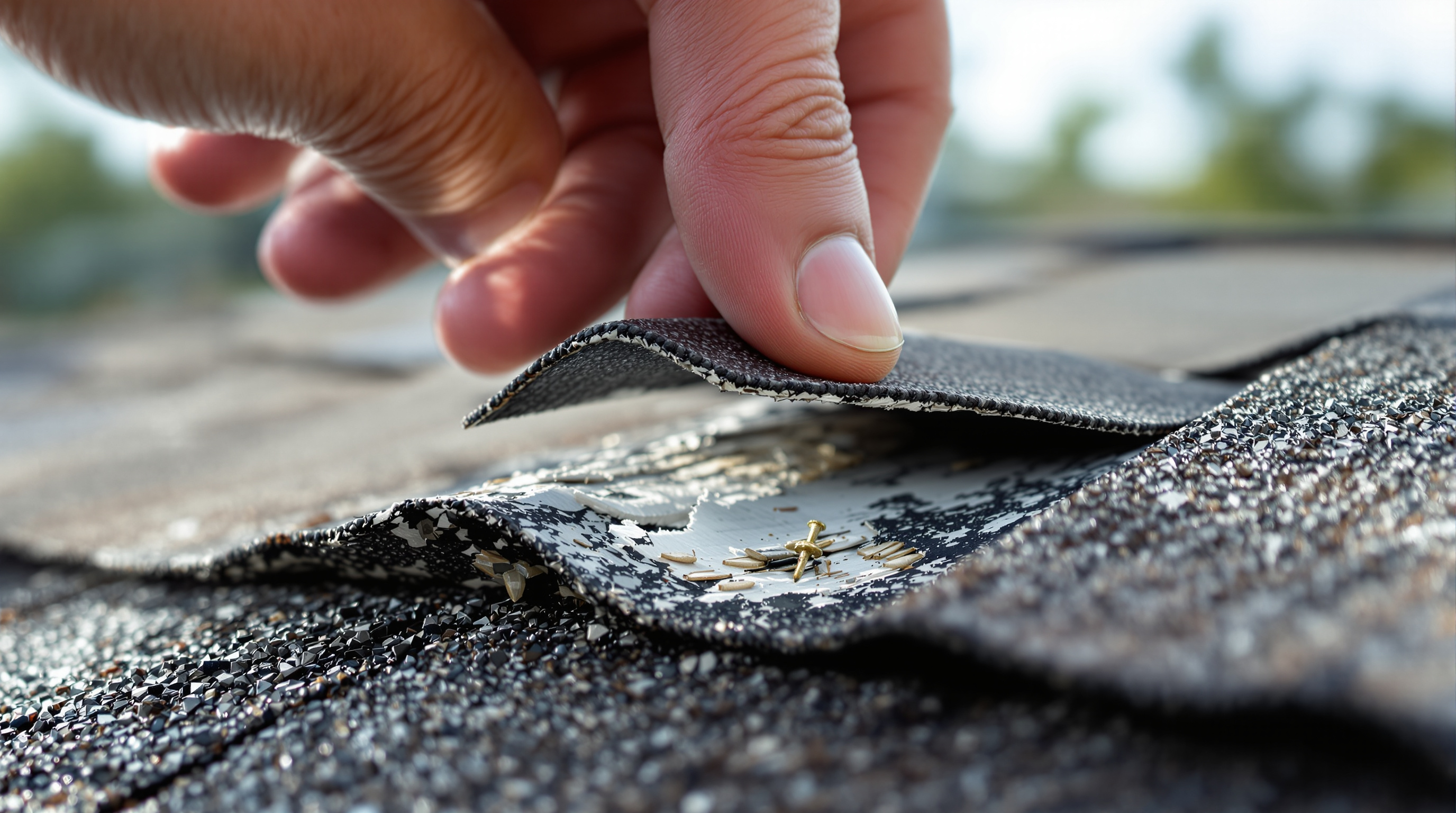
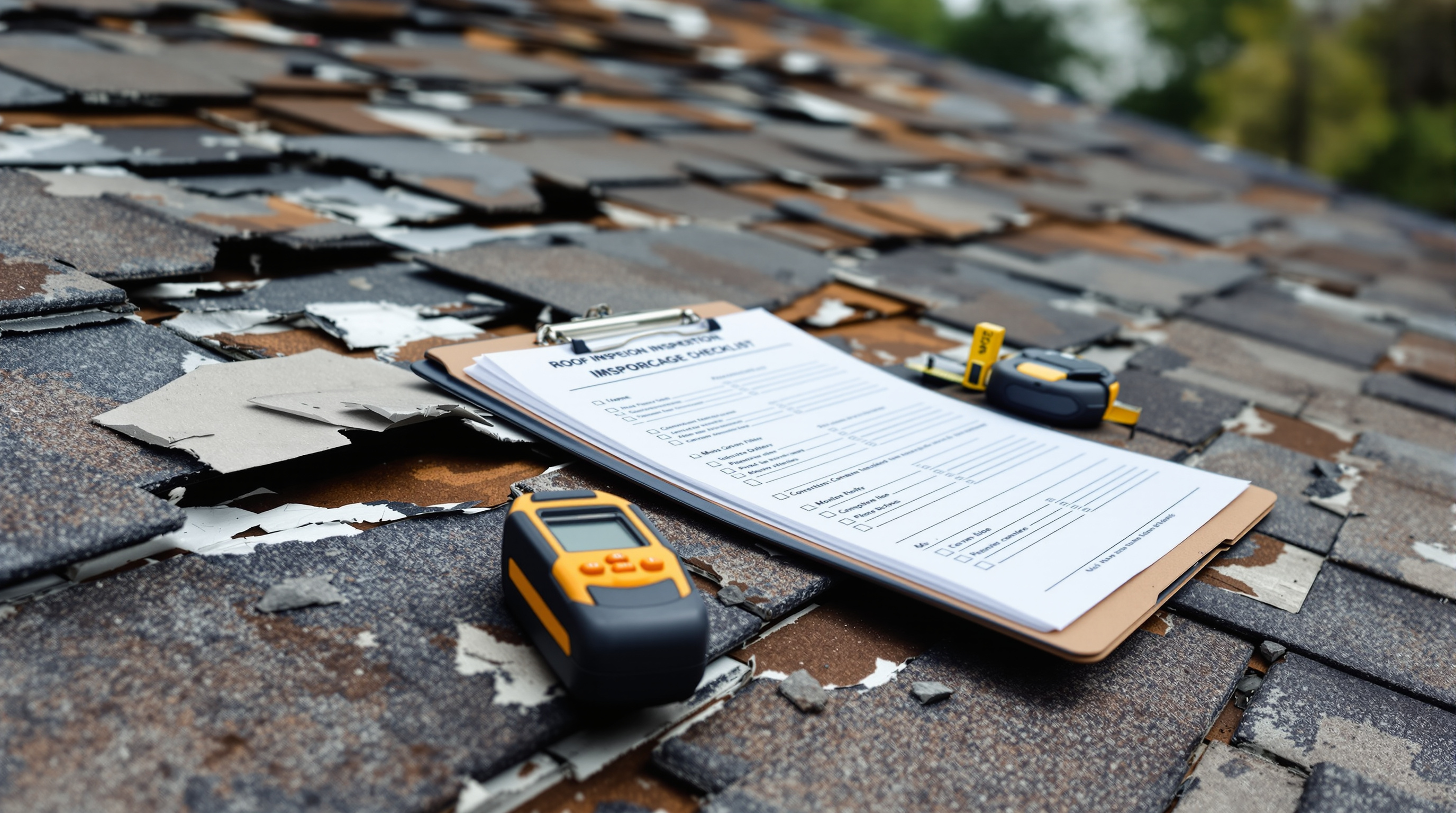
Step four is scheduling a professional inspection alongside your adjuster visit. Adjusters are trained to minimize scope. A licensed roofing contractor advocate knows what hidden damage looks like — nail pops from wind uplift, broken sealant strips, micro-cracks in shingle tabs — and how to document it in the adjuster's format. We provide insurance-documentation inspections that produce the same written report format adjusters use.Types of Roof Storm Damage in Mobile & Baldwin County
Hurricane & Tropical Storm Wind Damage
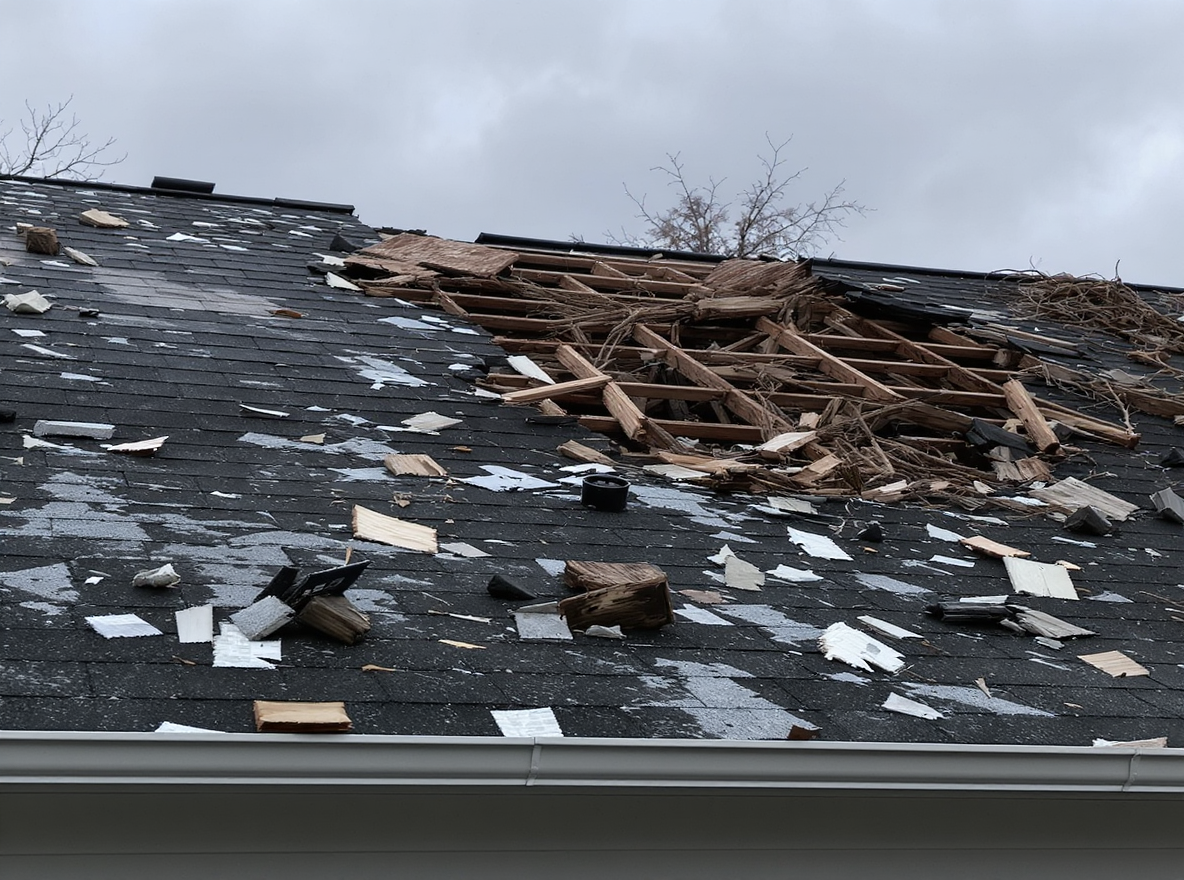
Gulf Coast wind damage follows predictable patterns based on storm intensity. At tropical storm strength (39–73 mph sustained), the most common damage is ridge cap loss — ridge caps take the highest wind load of any roof component and are typically the first to separate. At hurricane Category 1 strength (74–95 mph), field shingle loss begins in earnest, particularly at eaves, rakes, and any section where the nail pattern didn't meet the 130 mph wind zone requirement. At Category 2 and above — the level at which Hurricane Sally made landfall near Gulf Shores in September 2020 — widespread shingle loss, structural exposure, and flashing displacement are common. We repair every category of wind damage from post-storm ridge cap replacement to full replacement of storm-destroyed roofing systems.
- Hurricane and tropical storm wind damage
- Hail damage to shingles and metal
- Tree and debris impact
- Hidden wind uplift damage
- Emergency tarping and waterproofing
- Insurance claim documentation
Hail Damage
Mobile County receives more hail events than most Gulf Coast markets due to its position relative to inland supercell storm tracks coming off the Mississippi valley. Mobile sits in a 140–160 mph design wind speed zone. Hail damage to shingles ranges from cosmetic granule loss (visible but not structurally significant in the short term) to impacts that fracture the shingle tab or fiberglass mat (which creates water entry points not visible from the ground). Hail that dents ridge cap metal, HVAC equipment, gutters, and flashing creates an insurance claim regardless of shingle impact severity. We document all hail damage in the adjuster format — granule impact patterns, dent density on metal components, and any structural shingle fractures.
Tree & Debris Impact
Coastal Alabama's tree canopy — pine, live oak, water oak — creates significant impact risk in any storm above tropical storm strength. A falling pine on a roof is not a subtle event. We handle structural assessment of the roof system after tree impacts, identify all compromised structural members (rafters, decking, ridge boards), and coordinate the repair scope between roofing work and any structural framing repairs required. Emergency tarping of tree-impact areas is first priority — these are always structural exposures requiring immediate protection.
Hidden Damage — The Most Dangerous Kind
The most costly storm damage is what you can't see from the ground. After any storm with sustained winds above 60 mph, shingles can lift, break their adhesive bond, and re-seat — appearing intact from the street but providing no protection in the next rain event. Nail pops from wind uplift create small but direct water entry points. Micro-fractures in shingle tabs allow water penetration under pressure but don't show as missing shingles. The only reliable way to identify this damage is a physical roof inspection combined with an attic inspection. We perform post-storm inspections specifically designed to find what adjusters and untrained eyes miss.
The Alabama Storm Damage Insurance Claim Process — Step by Step
- 1
Document Before Anything Else
Timestamped photos and video of all visible damage before any tarping or cleanup. Include interior water damage, attic conditions, and any pre-existing rooftop equipment. This documentation is the foundation of your claim.
- 2
Open the Claim — Same Day
Call your carrier's claims line, report the date of loss, and get a claim number. File within 30 days of the storm event. Delayed filing gives carriers grounds to dispute the scope of original damage versus secondary deterioration.
- 3
Emergency Tarping — Stop the Damage
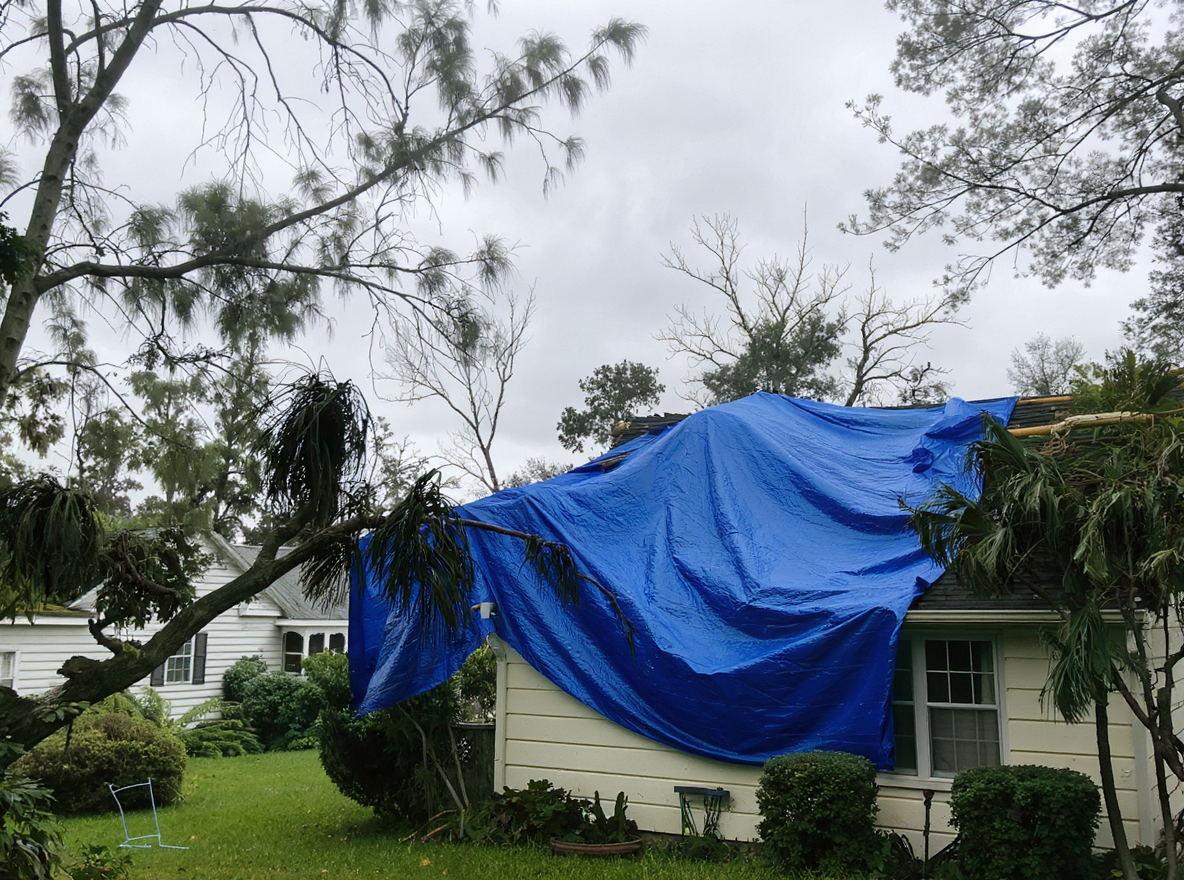
We tarp structural exposures within 24–48 hours. Tarp costs are part of a covered storm claim — save all invoices. A properly installed tarp covers the ridge and uses mechanical fastening, not just surface placement. We document the tarp installation photographically for your claim file.
- 4
Adjuster Visit — Bring Your Contractor
Schedule your contractor's inspection to coincide with or precede the adjuster visit. Adjusters minimize scope; your contractor documents everything in the adjuster's format. If the adjuster's scope misses damage we identified, we submit a written supplement request with supporting documentation.
- 5
Receive ACV Check, Complete Work, Collect Depreciation
Most Alabama policies pay Actual Cash Value (ACV) first, then release the depreciation holdback after work is completed and documented. We provide all required completion documentation in the format your carrier requires to trigger the depreciation release. Alabama law requires you to pay your deductible — we don't waive it.
- Document all damage with timestamped photos BEFORE any tarping or cleanup
- File your insurance claim within 30 days of the storm event
- Schedule a contractor inspection alongside or before the adjuster visit
- Emergency tarping costs are part of a covered storm damage claim
Storm Damage Roof Repair After Hurricane Sally — Lessons for Gulf Coast Homeowners
Hurricane Sally made landfall near Gulf Shores as a Category 2 storm on September 16, 2020 — one of the slowest-moving Gulf Coast hurricanes in recorded history, which meant prolonged rainfall totals exceeding 20 inches in some locations and sustained wind damage across the entire Mobile and Baldwin County service area. The demand for roofing service was immediate and overwhelming across the market.
Our response approach: active leaks and structural exposures first; emergency tarping within 24–48 hours for the most critical situations; permanent repairs scheduled in order of severity. Homeowners who had pre-existing relationships with us, who had documentation of their pre-storm roof condition, and who contacted us within the first 48 hours moved through the queue faster. The homeowners who called within days vs. weeks had meaningfully better outcomes — both in response time and in insurance documentation strength.
A Licensed Roofing Contractor You Can Reach After the Storm
Local and Licensed — Not Storm Chasers
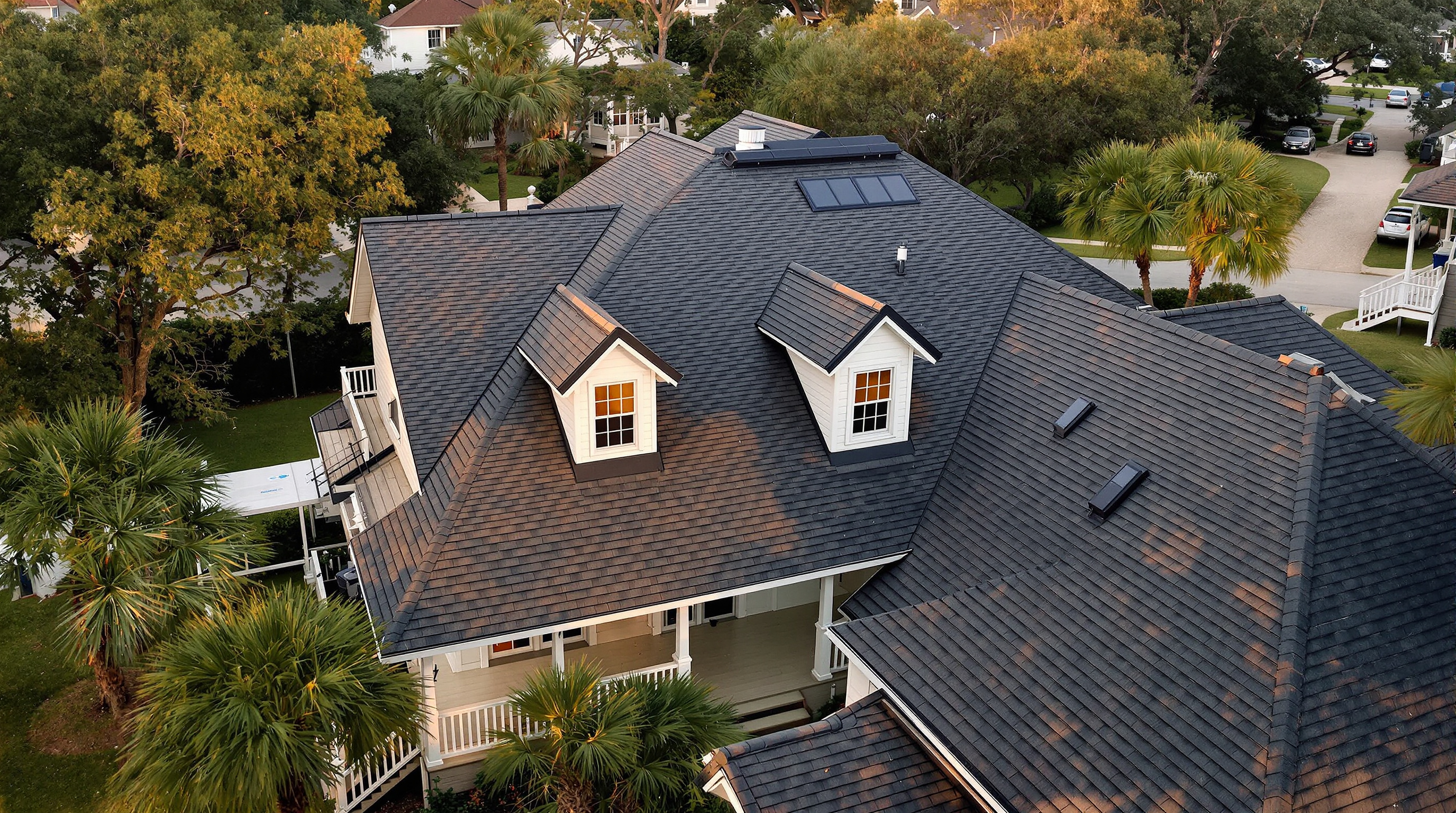
Permanent offices across Mobile County and Baldwin County. We've been here since 2018. When your warranty issue comes up two years from now, we answer the phone. Storm chasers won't. Our Alabama contractor's license number is available on request and verifiable at the ALBGC website.
Insurance Documentation Expertise
We produce damage documentation in the format insurance adjusters use — written reports, measurements, photographs, material specifications. We know how to identify hidden damage and how to document it so it doesn't get left off your claim.
Emergency Tarping and Stabilization
If a storm has removed shingles, a tree branch has punctured the deck, or high winds have blown back a large section of roofing, the deck and interior are directly exposed to weather. A properly installed emergency tarp — one that covers the ridge, not just the damaged section — will hold through normal Gulf Coast weather.
Pre-Storm Inspections Available
The best time to document your roof condition is before a storm, not after. Pre-season inspections in May give you a baseline record that's invaluable for post-storm insurance claims. A carrier cannot dispute that damage is storm-related when the same contractor who inspected the roof three weeks ago is documenting the post-storm condition.
Storm Damage Roof Repair — Real Homeowner Experiences
"After Sally, we had three storm chasers knock on our door the same week. We called Southern Roofing instead — they'd done work on our neighbor's house before the storm. They had us tarped within two days and the permanent repair done in three weeks. The storm chasers who were pitching us are long gone."
"The adjuster initially tried to say only two sections of ridge cap were storm-damaged. Southern Roofing's written inspection documented nail pops across the entire rear slope and shingle adhesive failure in four sections — all from the same wind event. The supplemented claim covered full replacement. That documentation made a $9,000 difference."
"We had them do a pre-season inspection in May. When the October storm hit, we had a three-month-old condition report showing what the roof looked like before. The claim was processed in six weeks with no dispute about what was pre-existing. That inspection paid for itself about 40 times over."
Storm Damage Roof Repair Questions for Alabama Homeowners
First priority: stop water from getting in. Document everything from the ground — photograph all visible damage before any cleanup or tarping begins. Insurance adjusters use pre-tarp photographs to establish damage scope; photos taken after tarping lose critical detail. Call your insurance carrier to open a claim, then call a licensed local roofing contractor for emergency tarping and an official damage assessment. Do not sign anything with a contractor you haven't verified is locally licensed and insured in Alabama.
The claim process: (1) Document all visible damage with timestamped photos before cleanup begins. (2) Call your carrier's claims line to open the claim and get a claim number. (3) Schedule a roofing contractor inspection alongside or before the adjuster visit. (4) Review the adjuster's scope against your contractor's assessment — file a written supplement if items are missing. (5) Receive the ACV check, complete the work, then submit the final invoice to receive the depreciation holdback. Alabama law prohibits contractors from waiving your deductible.
Storm chasers are out-of-state contractors who follow major storm events, set up temporary operations, aggressively solicit homeowners door-to-door, and typically move on within 3–6 months. The most common problems: collecting insurance checks before work is complete, using substandard materials, performing non-compliant installations, and being unreachable when warranty issues arise. A local contractor has a permanent physical address, has been operating before the storm, holds an Alabama contractor's license verifiable at the ALBGC, carries current general liability and workers' comp insurance, and will be here after the job is complete.
Alabama insurance policies typically allow 1–2 years from the date of loss to file a claim, but the practical deadline is much sooner. Damage that sits unrepaired and creates secondary water damage gives carriers grounds to dispute what was storm damage versus neglect-driven deterioration. File within 30 days of the storm event. After major events like Hurricane Sally, carriers deployed additional adjusters and generally processed Gulf Coast claims within 60–90 days.
The most dangerous storm damage is what you can't see. After winds above 60 mph, shingles may look intact but have lifted, broken their adhesive bond, and re-seated. These will fail in the next significant rain event. Signs to look for: granule deposits at downspouts (a storm event produces a single large flush); visible nail pops at ridge caps; lifted or rippled shingles when viewed from a low angle in raking light; water stains on attic sheathing during or after rain. The only definitive assessment requires a physical inspection of the roof surface and attic side of the deck.
FEMA Individual Assistance can cover basic home repairs needed to make a residence safe when insurance does not cover the damage. For Alabama homeowners with standard homeowners insurance, FEMA assistance is generally not applicable for roof claims. The more relevant Alabama-specific program is the Strengthen Alabama Homes (SAH) grant, which provides up to $10,000 for FORTIFIED™ Roof upgrades regardless of storm event — this is a pre-disaster mitigation program, not post-disaster relief.
Storm Damage Roofing Services Across Mobile & Baldwin County
We respond to storm damage calls throughout Mobile County and Baldwin County.
Baldwin County
Storm Damage? Don't Wait.
Every hour of exposure means more interior damage. We dispatch same-day for active leaks. We're local, licensed, and not going anywhere.
Same-day response for active leaks · Licensed & Insured · Alabama contractor on-site